Dejar un mensaje
Si le interesan nuestros productos y desea obtener más información, deje un mensaje aquí y le responderemos lo antes posible.
Holographic Pigment: Solvent, Size, Colour — in That Order
Cut the holographic range in a fixed order: carrier solvent first, particle size second, colour last. Only the last cut can be reversed after you order.
Número de artículo :
HL001, HL003, HL004, HL006 (powders and flakes); CH (holo colourshift mirrors); HMC (cosmetic-grade multichrome); ARHL and AH (aurora holographic); AM / AM2 / AM3 (dry-powder only); ARS6 / ARS21 / ARS31 (solvent resistant)Efecto de color :
Diffraction — each particle splits white light into the full visible spectrum, so the band moves with the viewing angle rather than showing a fixed complementary pairTamaño de partícula :
15–1000 μm across the line; HL001 single values 15, 25, 35 and 38 μm; CH 10–60 μm; AH 15–75 μm; HMC 20–80 μm; HL003 and HL004 published in two bands, 100–1000 μm and 10–125 μmComposición :
Silica with aluminium and titanium dioxide for the HL001 silver grades; polyethylene terephthalate film with aluminium and iron oxide for HL001-705; polyethylmethacrylate with aluminium oxide for the HL003 and HL006 flake lines — powder-level detail on thMarca :
KolortekCantidad mínima de pedido :
1 kgSolicitud :
Nail polish and UV gel, pressed and loose cosmetics, solvent-borne inks, spray coatings, powder coatings, resin casting and craftParticle sizes across this range run from 15 μm to 1000 μm — close to two orders of magnitude, and a wider spread than most formulators expect when they first open the colour card. The band you pick changes the look further than the shade does. It also decides whether a mistake can still be undone.
Two powders leave here under the same colour name, Holographic Silver. One is silica with aluminium and titanium dioxide. The other is a polyethylene terephthalate film with aluminium and iron oxide. Same name, different chemistry.
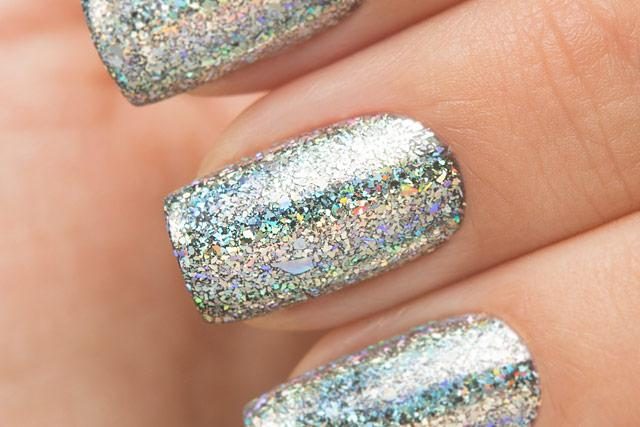
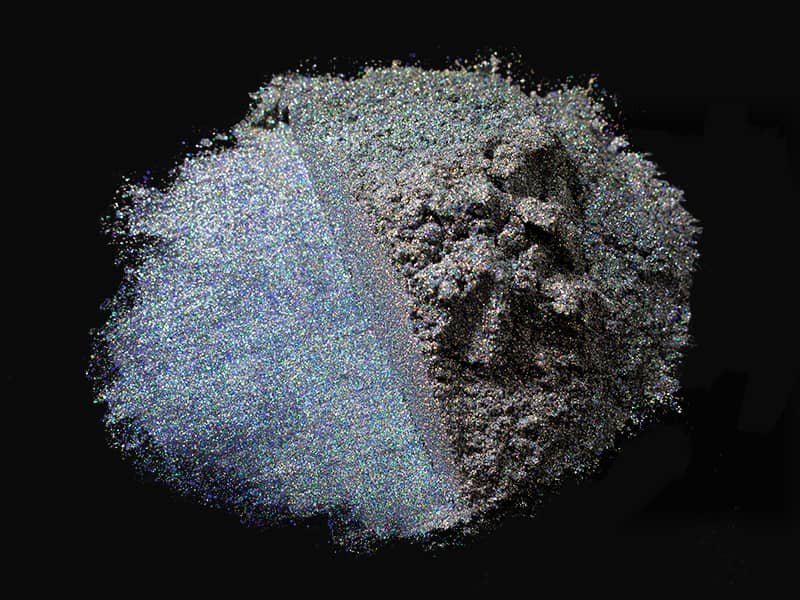
Fig. 1 — Holographic silver powder on a dark ground. The spectrum appears only where light strikes at a suitable angle. Product photo.
That difference makes solvent suitability the first question on any enquiry. AM, AM2 and AM3 are specified for dry powder only; in a solvent-borne carrier they lose colour. The colour name never tells you suitability. The datasheet does.
So treat this page as an order of elimination, not a parameter list. Three cuts, applied in a fixed sequence, take the range down to two or three grades worth quoting.
The sequence is not house style. It is ordered by what a mistake costs. Get cut one wrong and the batch is scrap. Get cut two wrong and you reformulate or re-order. Get cut three wrong and you place another order for a different shade — the material you already bought still works.
The first question is not about colour, and not about particle size. It is about what the powder goes into.
Does your system contain solvent? Solvent-borne nail polish, ink or spray coating: yes. For a gel or waterborne system, check the actual formulation, including any co-solvent. A 100% solids UV system or dry pressed compact contains no solvent, but the UV monomer mix still needs a compatibility check.
Where solvent is present, the field narrows to three lines: ARS6 (Candy) and ARS21 / ARS31 (CandyPlus). Those are the grades specified for carriers that contain solvent.
Where the route is dry — a pressed compact, a loose cosmetic powder — AM, AM2 and AM3 become usable. They are specified for dry powder only. That is not a shortcoming; it is the duty they were built for. In dry powder they behave as intended. In a solvent-borne carrier they do not, and the colour leaves the film.
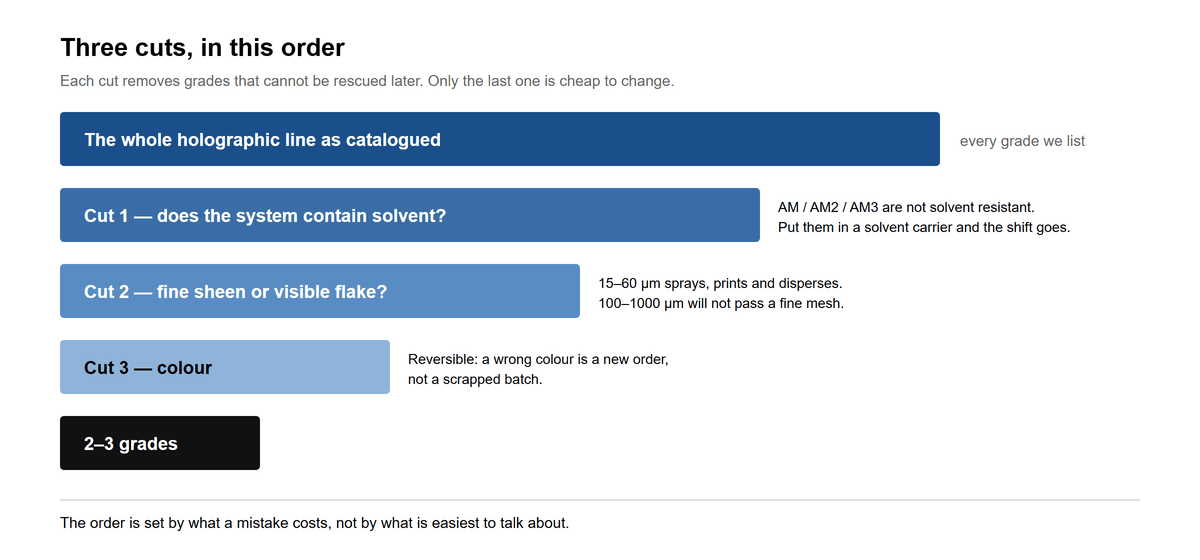
Fig. 2 — The order of the three cuts, and the grades each one removes from consideration. Diagram.
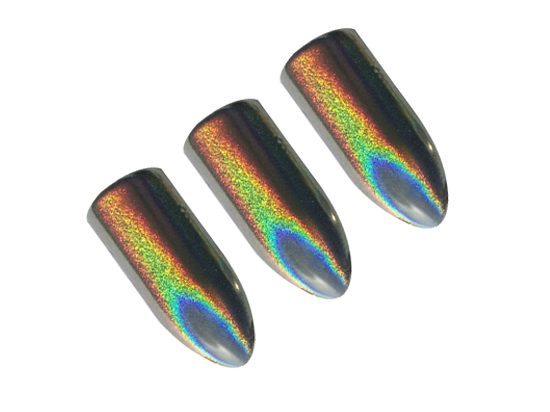
Fig. 3 — A 25 μm grade on nail tips. Which line to select depends on the intended system's solvent content. Application photo.
The cut removed grades on compatibility before anyone looked at a shade. Reversing it is the expensive error: a batch built on the wrong line cannot be corrected by adding more of anything. For nail systems, see aurora holographic pigment for nail art.
Second question: do you want one even sheet of metallic sheen, or flakes you can pick out one at a time?
15–60 μm is the sheen end. The spectrum reads as a layer of moving colour at arm's length and resolves into grain only close up. It passes fine mesh, sprays, and disperses evenly. HL001-815 sits at 15 μm, HL001-825 at 25, HL001-535 at 35, HL001-705 at 38. CH publishes 10–60 μm, AH 15–75, HMC 20–80.
100–1000 μm is the flake end; HL003 and HL004 each publish two bands, 100–1000 μm and 10–125 μm. Every flake is its own reflector. Opacity falls, single-flake impact rises, and a fine screen stops being an option.
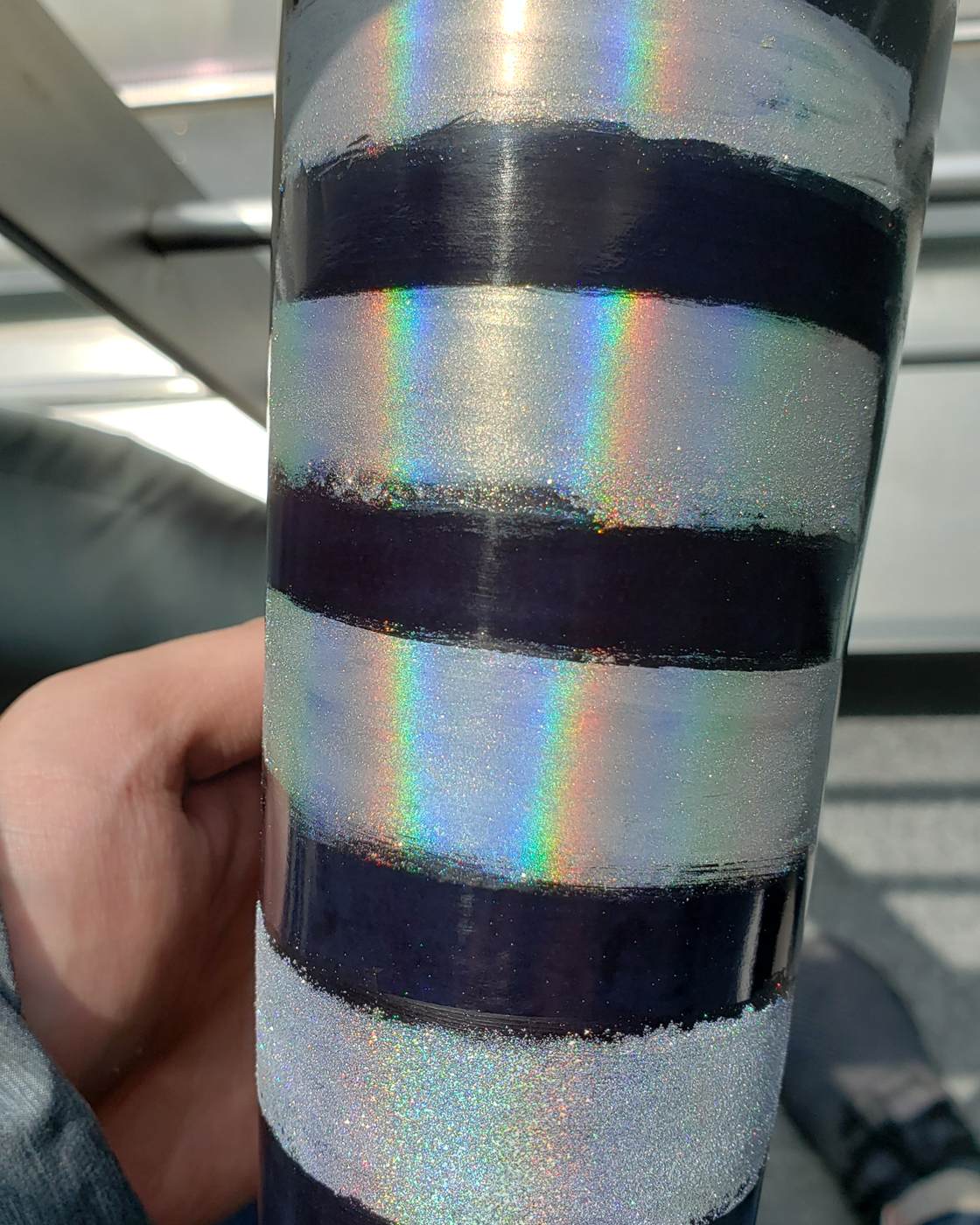
Fig. 4 — One powder, four bands, one substrate. The large sizes separate the spectrum; the fine ones leave a moving sheen. Application photo.
The arithmetic is what gets missed. For platelets of comparable thickness and composition, ten times the diameter carries roughly a hundred times the material. At equal loading you get about a hundredth of the flakes. A larger band is not the same effect turned up — it is a different effect.
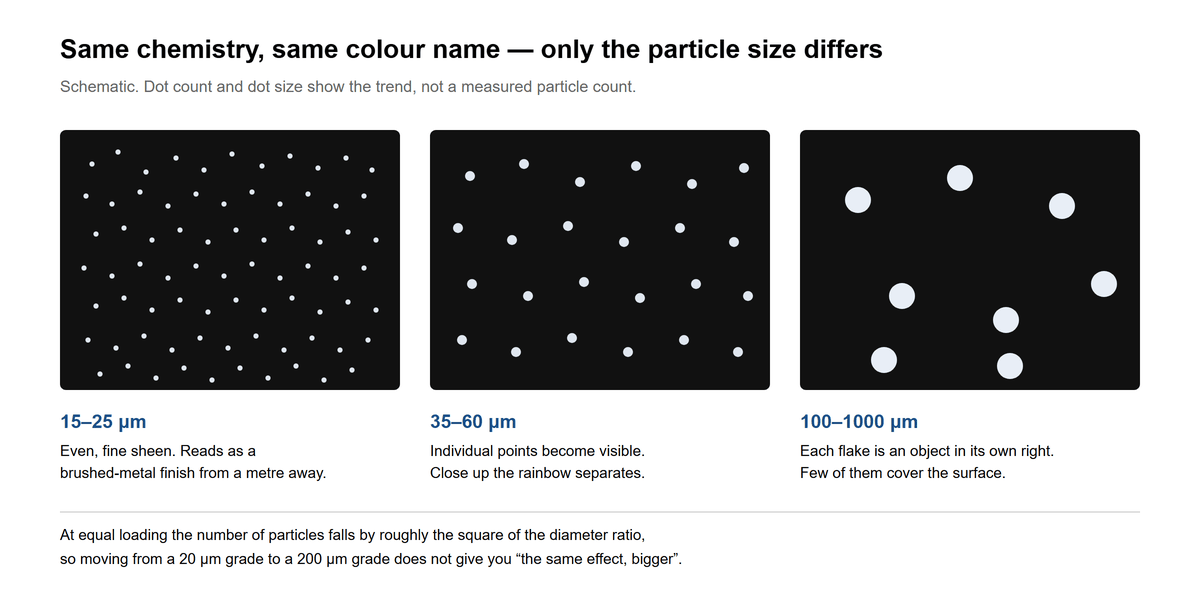
Fig. 5 — Diameter against visible particle count at constant loading. Indicative, not to scale. Diagram.
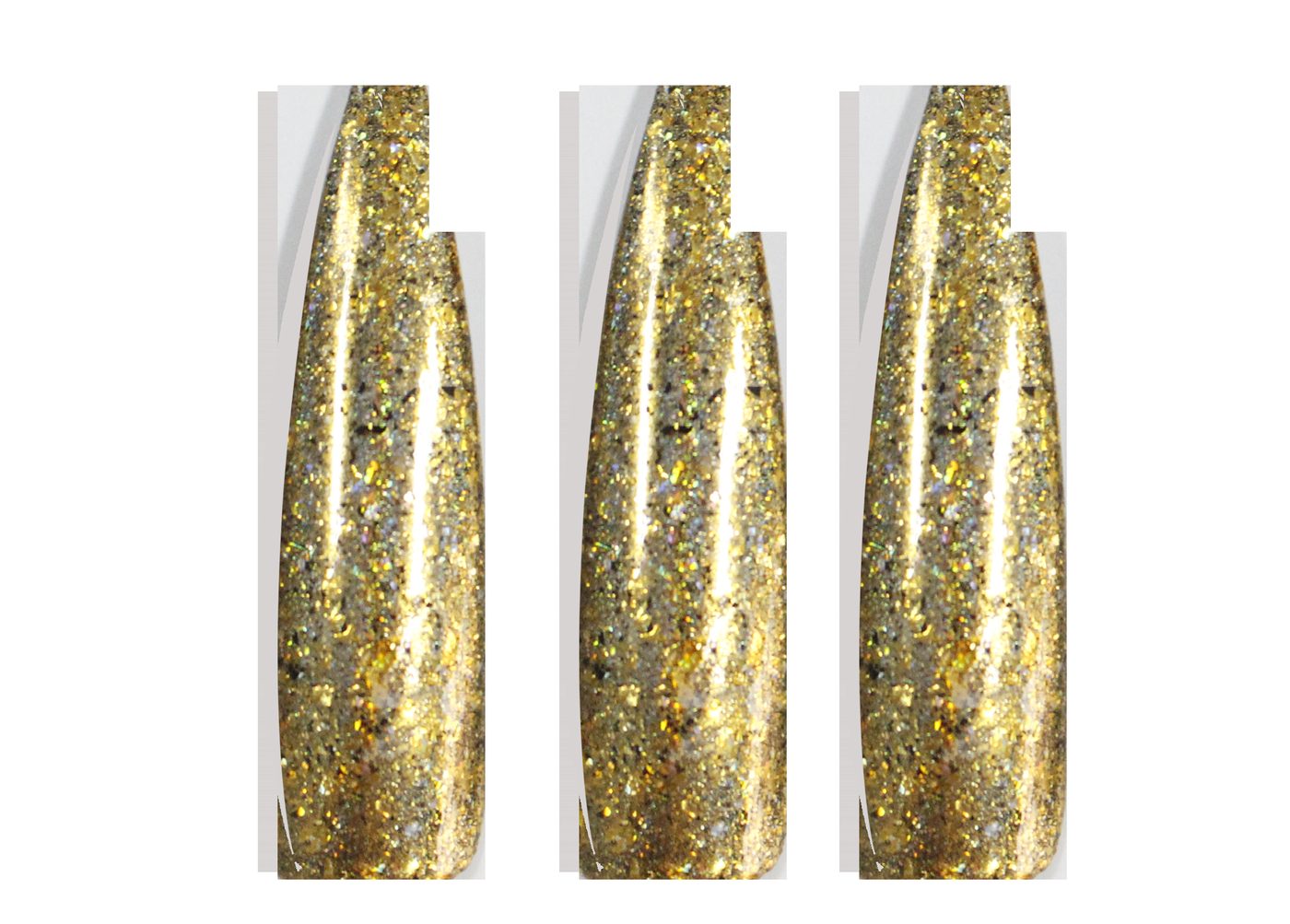
Fig. 6 — Large-band flakes: each particle is a separate reflector rather than part of a continuous sheen. More at holographic chrome pigments and holo flakes. Product photo.
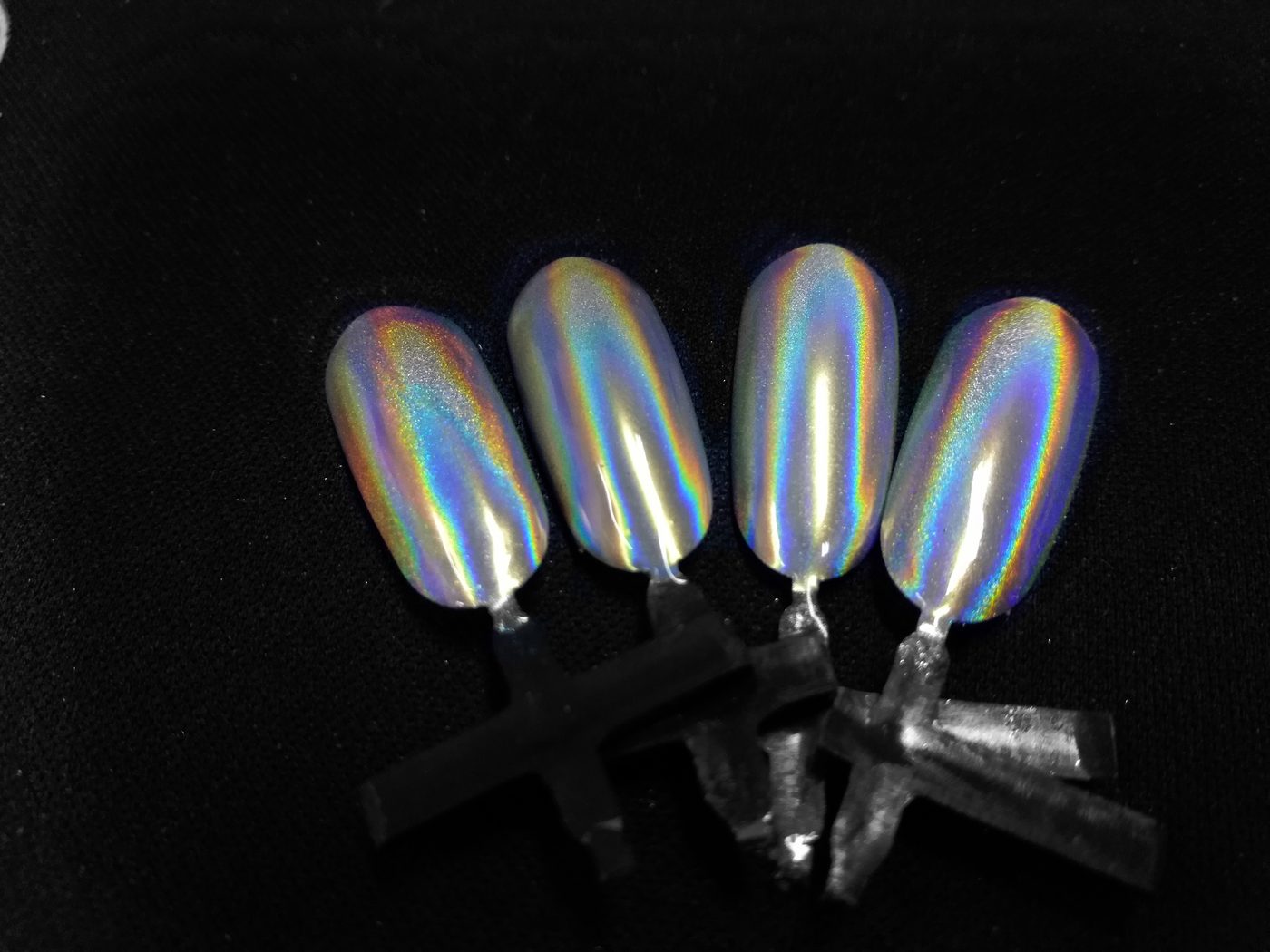
Fig. 7 — On a dark base the diffracted band reads most completely, because the base absorbs much of the competing light. Application photo.
After two cuts, what remains is shade. This is the cheap cut, and the only reversible one: a wrong shade is another order, not a scrapped batch. It is also the cut people start with, which is why the first two get made by accident.
The table is the carrier cut written as a lookup. Read down the carrier column first, then across. Check the particle-size band within the remaining lines before choosing a colour.
| What the carrier is | Which grades to avoid | Which grades to quote |
|---|---|---|
| Solvent-borne nail polish and gel | AM, AM2, AM3 — specified for dry powder only | ARS6 (Candy); ARS21, ARS31 (CandyPlus) |
| Waterborne systems | AM, AM2, AM3 | ARS6, ARS21, ARS31 — flag any co-solvent in the formulation |
| 100% solids UV | AM, AM2, AM3 | ARS21, ARS31 — confirm compatibility with your monomer mix |
| Pressed and loose powders | None excluded on solvent grounds alone; confirm suitability for the intended cosmetic use | AM, AM2, AM3 |
| Spray coatings | AM, AM2, AM3 | ARS6, ARS21, ARS31 |
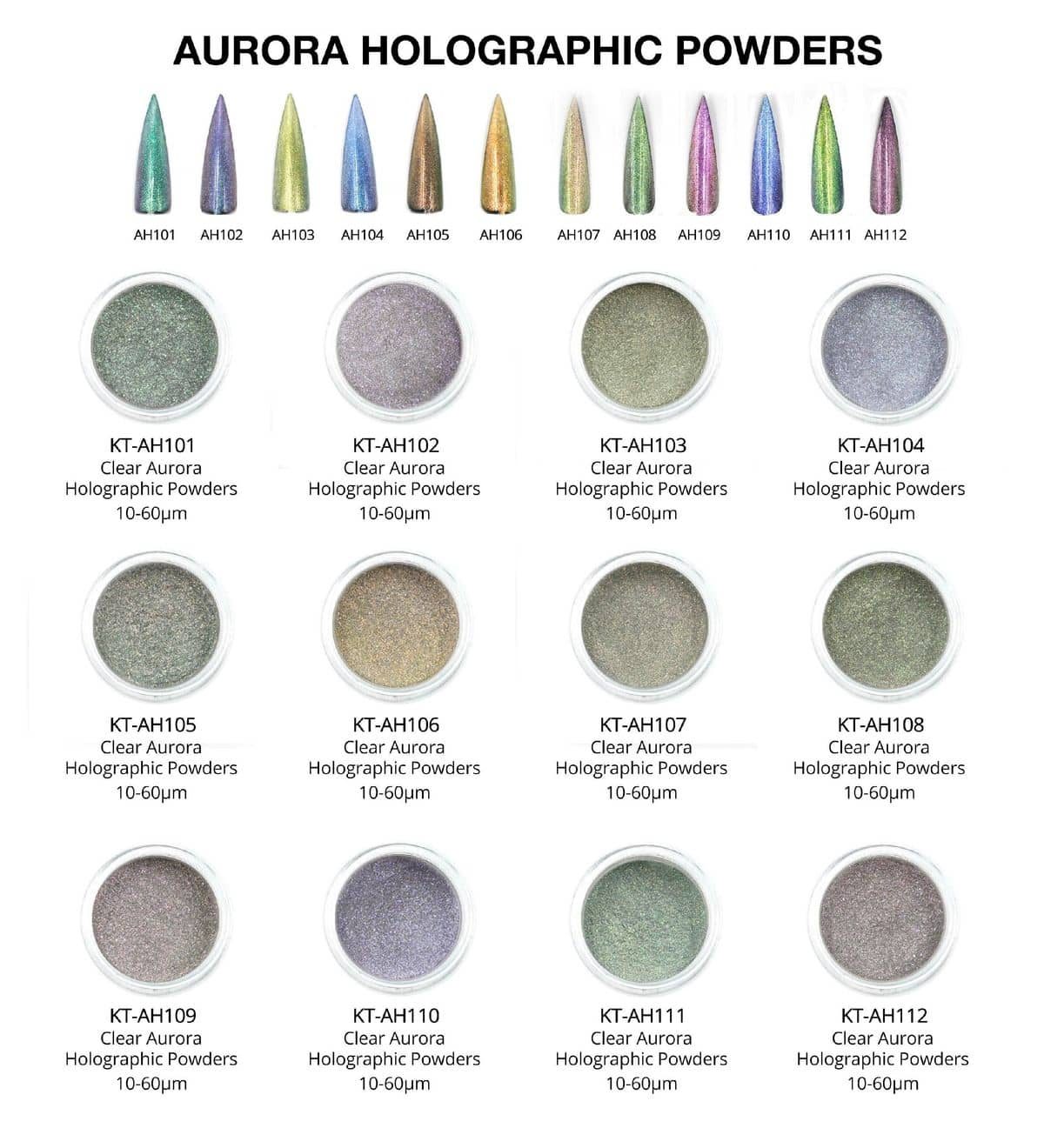
Fig. 8 — Twelve shades cut at a single particle band — the width of the choice left after cuts one and two. Full list in the Holographic catalogue. Product photo.
A sample settles four things. Hue, and how cleanly the spectrum separates. The real particle size and how tight the distribution is. Whether it disperses in your carrier without clumping. Whether the cured film still feels grainy under a fingertip.
It settles none of the slow questions: light stability over months, shade drift between batches, and whether the effect survives your production scale. Those run on your line, at your film thickness, on your equipment.
Carrier, and whether it contains solvent. Not "nails" — the actual chemistry of the system the powder enters.
Target size band. A continuous sheen, or flakes you intend to see as flakes.
Substrate. Dark base, light base, or transparent. The diffracted band reads strongest on dark and in transparent systems, and washes out over white.
Loading and batch size. The percentage you plan to use, and the kilograms you plan to buy.
Tell us those four to help narrow the choice to two or three grades worth quoting, with carrier compatibility considered first. Start from the holographic pigment category if you want to see the full spread first.
A powder coating carries no liquid solvent, so the carrier cut rules nothing out on that ground alone. But a dry-powder cosmetic line and a baked coating film are different duties. Send the bake profile and film build with your enquiry, and validate any candidate grade in a line trial.
Yes, and they work by different mechanisms: diffraction splits white light into the whole visible spectrum, while pearlescent pigments rely on thin-film interference and its complementary pairs. In a blend, expect the pearl to soften the rainbow as its share rises. The ratio is a formulation decision — test it in your own carrier at your own loading.
Because the effect is angle-dependent and the base sets what the rest of the light does. A dark base absorbs much of the competing light, while a transparent matrix lets the diffracted spectrum remain visible. Over a white base, diffuse white return washes it out and the colour flattens.
Fine grades include 15 μm (HL001-815) and 25 μm (HL001-825); the CH series starts at 10 μm. The finer the band, the more it reads as moving sheen rather than sparkle. Whether it looks grain-free in your film also depends on film thickness and loading — send both.
Tell us the carrier, the size band you are aiming at, the substrate and the loading you have in mind. Those four are what the three cuts need to work, and datasheets for the shortlisted grades are available on request.

Los pigmentos y escamas holográficas cromadas de Kolortek son colorantes difractivos diseñados para producir un aspecto metálico plateado líquido con un vibrante efecto prismático iridiscente. Compuestos por escamas ultrafinas con núcleo de aluminio, estos pigmentos actúan como prismas de alta intensidad que cambian de color en todo el espectro visible según el ángulo de la luz, ofreciendo un sofisticado acabado iridiscente.
LEER MÁS
 Español
 English
 Français
 Deutsch
 Русский
 Português