
Dejar un mensaje
Si le interesan nuestros productos y desea obtener más información, deje un mensaje aquí y le responderemos lo antes posible.
La demanda de los consumidores de productos interactivos y basados en la experiencia está acelerando la adopción de pigmentos funcionales en textiles, envases y bienes de consumo especializados. Dos informes recientes de la industria —WGSN—Previsión de materiales y textiles 2025/2026: El auge de los tejidos inteligentesy Packaging WorldEnvases interactivos: pigmentos que atraen e informan(Marzo de 2026) — ambos identifican este cambio como una tendencia duradera, no como una moda pasajera. Los colores reactivos y los efectos luminiscentes se están incorporando a la ropa, los envases de alimentos y bebidas, el etiquetado de seguridad y los accesorios de electrónica de consumo.
Nuestras líneas de pigmentos termocrómicos, fotocrómicos y fosforescentes son directamente aplicables a estas aplicaciones. A continuación, se presenta un desglose estructurado de dónde se ubican nuestros materiales y qué especificaciones son relevantes para cada segmento.
El pronóstico de WGSN apunta a una demanda de prendas luminosas y que cambian de color, impulsada por tres factores convergentes: el atractivo de la novedad, la función de seguridad (visibilidad en condiciones de poca luz) y la diferenciación del rendimiento. Paralelamente, el análisis de Packaging World documenta la creciente integración de tintas termocrómicas y fotocrómicas en los envases de alimentos y bebidas, principalmente para la indicación de temperatura, la detección de manipulaciones y la interacción con la marca en el punto de venta.
Ambos informes reflejan lo que observamos en las consultas técnicas recibidas: los fabricantes de textiles, embalajes, juguetes y productos de cuidado personal están evaluando activamente los pigmentos funcionales como herramienta de diferenciación de productos, con un escrutinio cada vez mayor del cumplimiento normativo y la durabilidad a largo plazo.
| Tipo de pigmento | Serie | Función clave | Aplicaciones objetivo principales |
|---|---|---|---|
| Pigmentos termocrómicos | Serie KTP | Cambio de color reversible por temperatura; múltiples rangos de activación disponibles; fórmulas sin BPA de serie. | Prendas de vestir, bolsos, accesorios; tazas, vasos; envases con indicador de temperatura; precintos de seguridad. |
| Pigmentos fotocromáticos | Serie KT-PMC | Desarrollo del color activado por luz ultravioleta/solar; revierte en ausencia de luz ultravioleta; ciclo reversible. | Revestimientos novedosos para exteriores; embalajes sensibles a los rayos UV; verificación de autenticidad; prendas de vestir especiales |
| Pigmentos que brillan en la oscuridad | — | Fosforescente a base de aluminato de estroncio; absorbe y almacena luz, liberándola gradualmente en la oscuridad. | Tiras reflectantes; productos infantiles; textiles de seguridad; artículos promocionales y de novedad. |
Para aplicaciones sobre sustratos textiles y de cuero, se recomiendan nuestros pigmentos termocrómicos y fosforescentes. Parámetros de funcionamiento típicos según nuestras guías de aplicación:
La aplicación termocrómica en esta categoría incluye el cambio de color sensible a la temperatura en prendas de vestir y accesorios, lo que produce un comportamiento interactivo vinculado al calor corporal o a la temperatura ambiente. Los materiales que brillan en la oscuridad cumplen funciones tanto de seguridad como de novedad: tiras reflectantes en prendas de abrigo, ropa y accesorios infantiles, y artículos promocionales donde la visibilidad en condiciones de poca luz es un requisito indispensable.
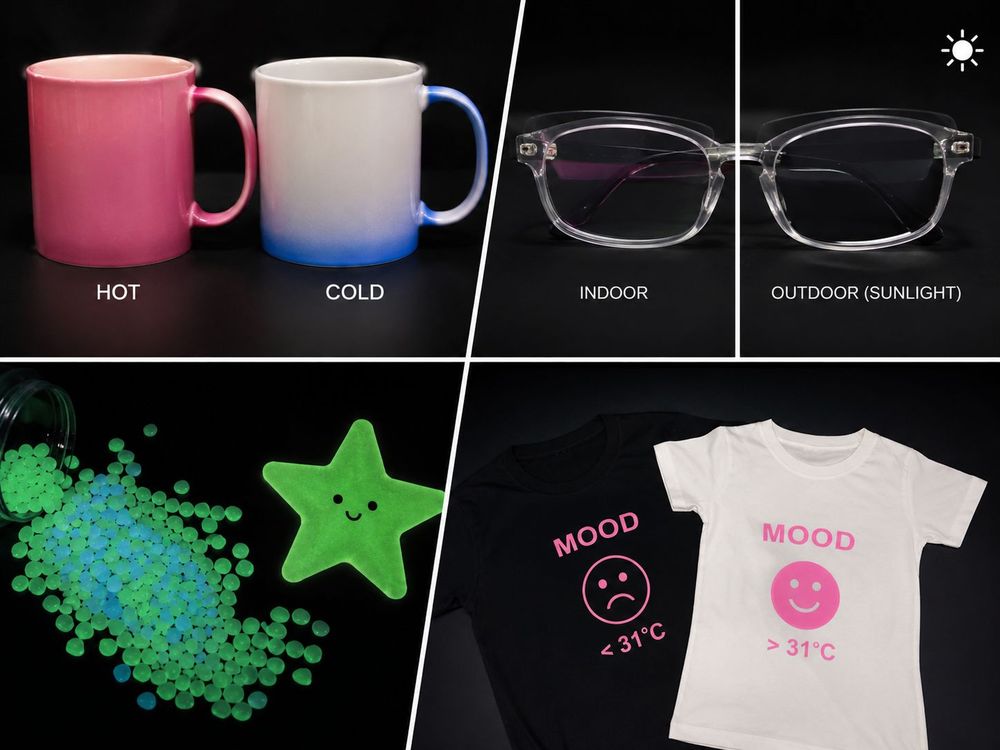
Los pigmentos termocrómicos (serie KTP) son adecuados para elementos impresos que indican la temperatura en los envases, lo cual resulta especialmente relevante para los envases de alimentos y bebidas, donde el propio envase comunica el estado del producto al consumidor. En el ámbito de la seguridad y la lucha contra la falsificación, estos materiales funcionan como indicadores de manipulación mediante un cambio de color visible que se activa con la temperatura.
Los pigmentos fotocrómicos (serie KT-PMC) se utilizan en envases sensibles a la luz ultravioleta, donde el color solo se desarrolla bajo la luz solar directa o la exposición a los rayos UV. Esta propiedad es aplicable a procesos de autenticación y envases para exteriores, donde la interacción forma parte de la experiencia del consumidor.
Tanto los informes de mercado como las conversaciones con nuestros clientes reflejan requisitos cada vez más estrictos en materia de seguridad de los materiales, especialmente para los productos de consumo. Nuestra postura actual en materia de cumplimiento normativo para los grados de pigmentos funcionales incluye:
Para los fabricantes que integran estos pigmentos en aplicaciones en contacto con alimentos, como envases de alimentos, vasos o productos infantiles, podemos proporcionarles, si lo solicitan, la documentación pertinente sobre certificaciones específicas de cada grado y datos de pruebas.
Además de los grados estándar de catálogo, ofrecemos servicios de fabricación OEM y ODM, etiquetado privado y personalización de color para aplicaciones de pigmentos funcionales. Si un grado existente no cumple con la temperatura de transición, la secuencia de color o el rango de tamaño de partícula deseados, nuestro equipo de desarrollo puede trabajar en función de las especificaciones. Esto es especialmente relevante para las marcas que desarrollan líneas de productos donde el comportamiento del pigmento es un parámetro de diseño definido, en lugar de un efecto general.
Los compradores técnicos y los equipos de I+D que evalúen estos materiales para su integración en textiles, sistemas de impresión o sustratos de embalaje pueden ponerse en contacto con nosotros para solicitar muestras, orientación sobre formulación o paquetes de documentación.

 Español
 English
 Français
 Deutsch
 Русский
 Português